Gingers greenhouse
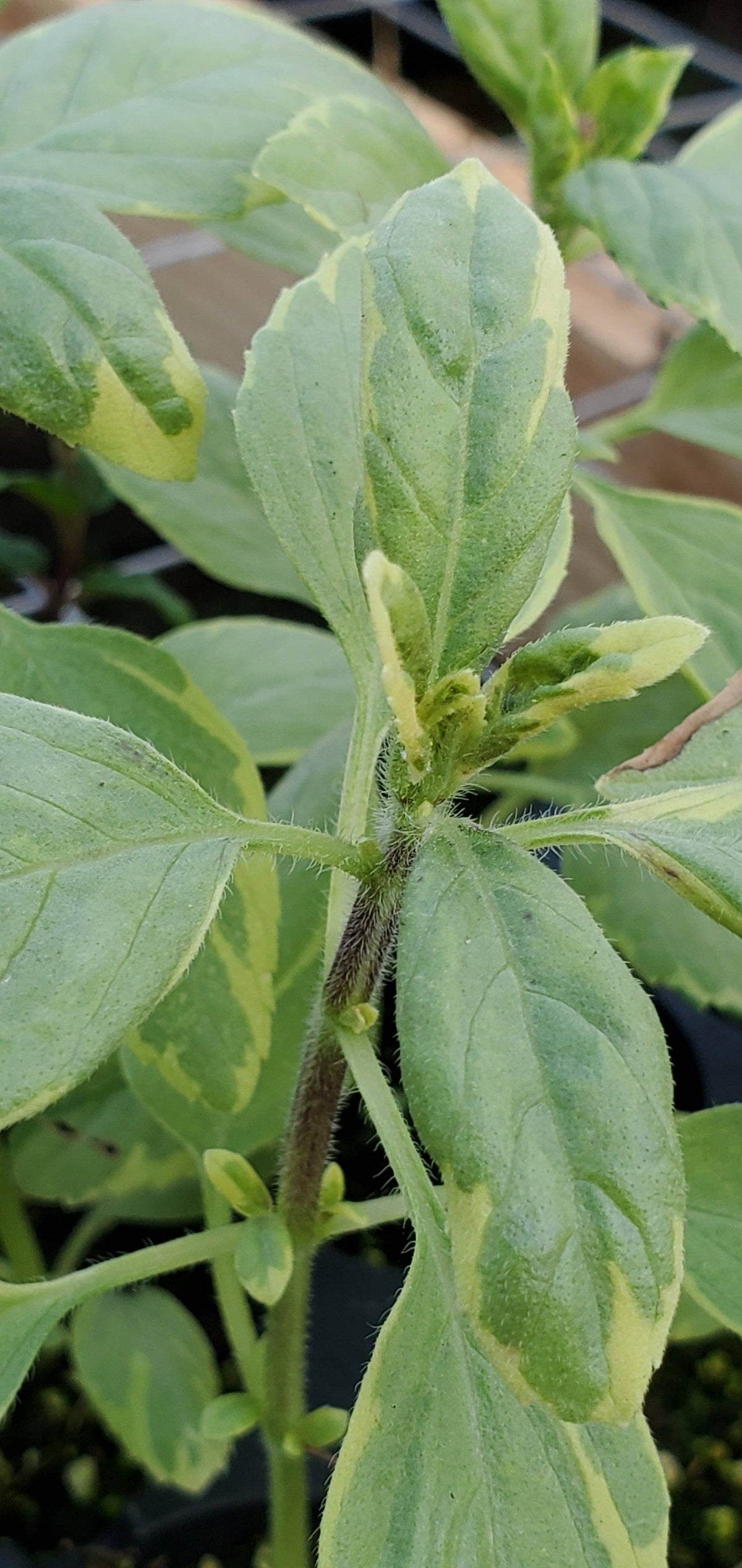
Basil variegated African Blue
Basil variegated African Blue
Couldn't load pickup availability
💜🌿 Variegated African Blue Basil Overview
Variegated African Blue Basil is a beautiful and unusual ornamental basil prized for its colorful foliage, aromatic leaves, and pollinator-friendly flowers. A variegated form of African Blue Basil, commonly associated with the hybrid Ocimum kilimandscharicum × Ocimum basilicum, this striking plant combines green, cream, and sometimes purple-toned foliage with the familiar spicy fragrance of basil. Its vigorous growth and colorful appearance make it a wonderful addition to herb gardens, patio containers, and edible landscapes.
✨ Appearance
- Beautiful variegated foliage featuring shades of green and creamy white
- Purple or burgundy tones may appear along the stems and leaf veins
- Leaves have a slightly textured appearance
- Aromatic foliage with a spicy, herbal fragrance
- Upright, branching growth habit
- Can develop into a large, bushy plant under ideal conditions
- Produces spikes of small lavender-purple flowers
- Flowers are especially attractive to bees and other pollinators
- Variegation may vary from leaf to leaf
☀️ Light
- Loves bright light and sunshine
- Outdoors, approximately 6 or more hours of direct sunlight is ideal
- Indoors, provide a very bright sunny window or strong grow light
- Good lighting helps maintain compact growth and attractive coloration
- Variegated portions of the foliage may be more sensitive to intense sunlight
- Gradually acclimate indoor-grown plants before moving them outdoors
- Some afternoon shade can be beneficial during extreme heat
💧 Water
- Prefers relatively consistent moisture during active growth
- Water when the top 1–2 inches of soil begin to dry
- Water thoroughly and allow excess moisture to drain
- Established plants can tolerate brief periods of dryness
- Container-grown plants may need more frequent watering during hot summer weather
- Avoid allowing the plant to repeatedly wilt severely
⚠️ Watering Warning
Variegated African Blue Basil appreciates regular watering, but it doesn't like constantly soggy roots. Don't water on a strict schedule—check the soil first. Allow the upper portion to begin drying before watering thoroughly again. Prolonged waterlogging can cause yellowing and root problems, while repeated severe drying may damage tender foliage.
🌡️ Temperature & Humidity
- Loves warm growing conditions
- Ideal temperature: approximately 65–90°F
- Performs beautifully during warm summer weather
- Comfortable in average to moderate humidity
- Sensitive to frost and prolonged cold
- Bring container plants indoors before freezing temperatures arrive
- Appreciates good airflow
🌱 Soil
-
Prefers fertile, well-draining soil
- Quality potting soil
- Compost or other organic matter
- Perlite or pumice for additional drainage
- Soil should retain some moisture without becoming waterlogged
- Containers should always have drainage holes
🌿 Growth & Care
- Vigorous growth under warm, sunny conditions
- Naturally develops a branching, bushy habit
- Pinch growing tips to encourage fuller growth
- Regular pruning helps maintain a compact, attractive shape
- Can be propagated from stem cuttings
- Remove damaged or declining foliage as needed
- Fertilize lightly during active growth
- Flower spikes can be left for pollinators or trimmed to encourage additional branching
- Watch for shoots that lose their variegation and become completely green
- Pruning strongly reverted growth may help preserve the plant's colorful appearance
🐾 Pet Safety
- Basil species are generally considered low-risk for cats and dogs, but specific toxicity information for variegated African Blue Basil is limited
- It's best to discourage pets from consuming large quantities
- Concentrated basil essential oils should not be treated the same as the living plant and may be harmful to pets
- Keep concentrated extracts and essential oils away from animals unless directed by a veterinarian
💜 Why Plant Lovers Love It
- Beautiful green and cream variegation
- Attractive purple-toned stems and flowers
- Wonderful aromatic foliage
- Vigorous, bushy growth
- Excellent pollinator appeal
- Easy to propagate from cuttings
- Makes a gorgeous addition to ornamental herb gardens
- Combines the beauty of a variegated houseplant with the fragrance of a traditional herb
- Because apparently regular basil wasn't fancy enough, so this one decided it needed variegation, purple flowers, AND a little extra personality! 😂💜🌿
Plant Nerd Note: African Blue Basil is generally recognized as a hybrid involving Ocimum kilimandscharicum and Ocimum basilicum. The familiar African Blue Basil is typically propagated from cuttings because it produces little or no viable seed.
Variegated African Blue Basil is a horticultural trade name, and the exact identity of plants sold under this name may vary between growers. For that reason, it's best to retain the supplier's cultivar identification rather than assume every variegated plant has an identical genetic background.
Culinary Use Note: Standard African Blue Basil is grown for its aromatic leaves, which have a stronger, spicier flavor than typical sweet basil. However, because plants marketed as Variegated African Blue Basil may differ in identity, confirm that your particular selection was produced and sold for culinary use before recommending it as an edible herb. Plants intended for consumption should be grown without ornamental pesticides that are not labeled for edible crops.
Share