The Happy Monstera Plant Co
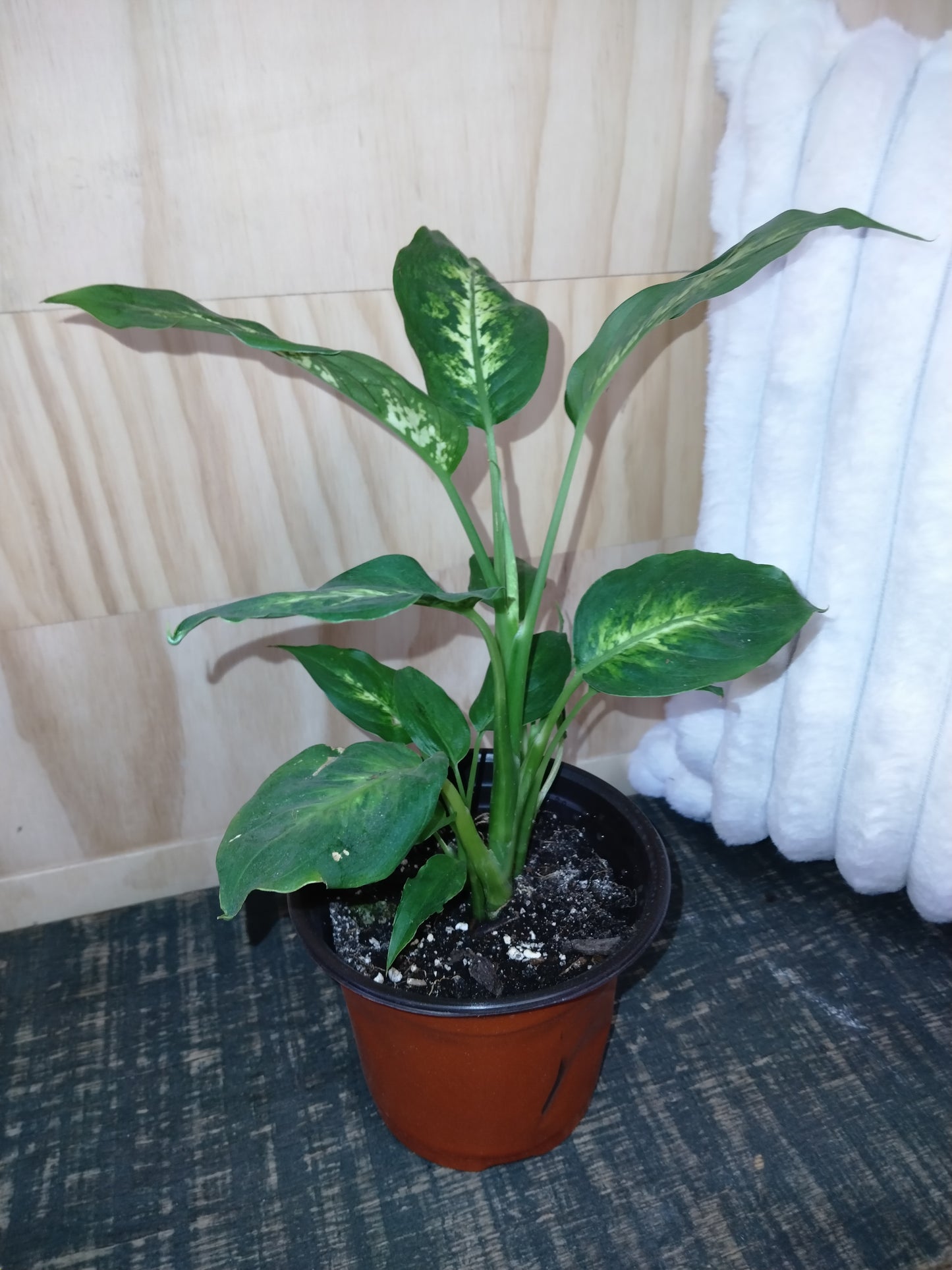
dieffenbachia
dieffenbachia
Couldn't load pickup availability
🌿 Dieffenbachia Overview
Scientific name: Dieffenbachia spp.
Common names: Dumb Cane, Leopard Lily
Family: Araceae
Origin: Tropical regions of Central and South America
Type: Tropical evergreen perennial
🌱 Description
Dieffenbachia plants are admired for their large, broad leaves that feature striking variegation in shades of green, cream, and yellow.
-
Growth is typically upright with a central cane-like stem.
-
Depending on the species or cultivar, they can range from compact tabletop plants to tall, floor-sized specimens up to 5–6 feet indoors.
-
Common varieties include Dieffenbachia ‘Camille’, ‘Tropic Snow’, ‘Reflector’, and ‘Seguine’.
☀️ Light Requirements
-
Prefers bright, indirect light.
-
Can tolerate medium to low light, though growth may slow and variegation may fade.
-
Avoid direct sunlight — it can scorch the leaves.
💡 Tip: East- or north-facing windows are ideal for soft filtered light.
💧 Watering
-
Keep soil consistently moist but not soggy.
-
Allow the top inch of soil to dry between waterings.
-
Overwatering can cause yellowing leaves and root rot.
💧 Winter care: Reduce watering slightly as growth slows.
🌡️ Temperature & Humidity
-
Temperature: 65–80°F (18–27°C). Avoid cold drafts below 60°F (15°C).
-
Humidity: Prefers moderate to high humidity (50%+).
-
Increase humidity with misting, pebble trays, or a humidifier.
-
🌸 Growth & Maintenance
-
Fast-growing under proper conditions.
-
Older leaves naturally yellow and drop as the plant matures — prune them off to maintain appearance.
-
Fertilize every 4–6 weeks in spring and summer with a balanced, diluted fertilizer.
✂️ Tip: Pinch back new growth occasionally to encourage a bushier shape.
🌿 Soil
-
Use a well-draining, aerated potting mix.
-
A blend of peat, perlite, and pine bark works well.
-
-
Ensure good drainage to prevent soggy roots.
🪴 Propagation
-
Most easily propagated by stem cuttings.
-
Take a section of stem with at least one node and root in water or moist soil.
-
-
Also possible to divide the plant during repotting.
⚠️ Common Issues
| Problem | Cause | Solution |
|---|---|---|
| Yellow leaves | Overwatering or old leaves | Check roots, reduce watering |
| Brown edges | Low humidity or inconsistent watering | Mist regularly or use humidifier |
| Pale leaves | Too little light | Move to brighter indirect spot |
| Leaf drop | Cold air or drafts | Keep away from vents and windows |
☠️ Toxicity Warning
-
Highly toxic to pets and humans if ingested.
-
Contains calcium oxalate crystals that can cause mouth irritation, swelling, and difficulty speaking (hence the name “Dumb Cane”).
-
Handle with care; wear gloves when pruning or propagating.
🌺 Quick Care Summary
| Care Aspect | Ideal Condition |
|---|---|
| Light | Bright, indirect |
| Water | Keep evenly moist |
| Soil | Well-draining, peat-based |
| Humidity | Moderate to high (50%+) |
| Fertilizer | Monthly during growing season |
| Toxicity | Toxic if ingested |
Share