Gingers greenhouse
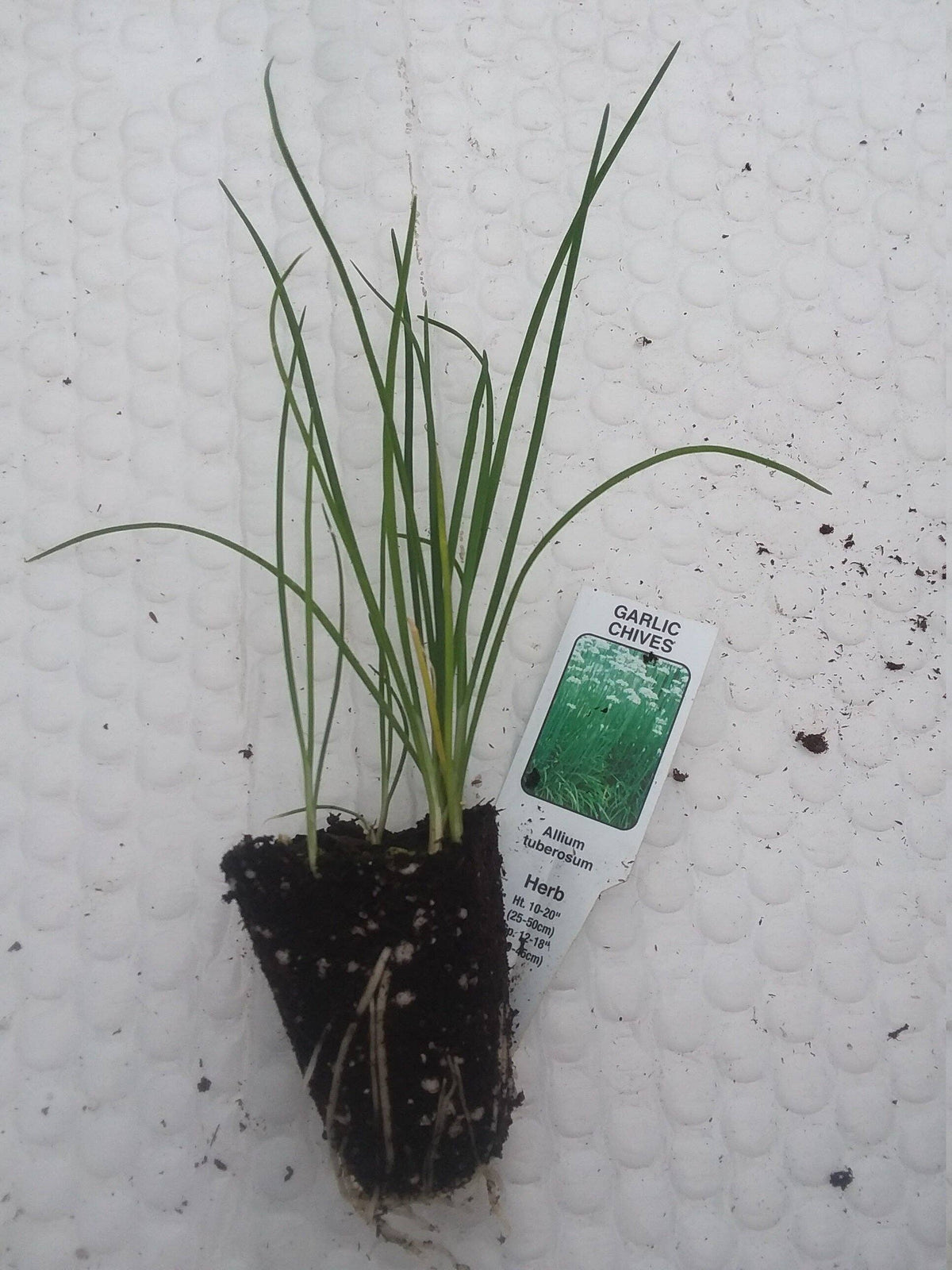
Garlic Chives
Garlic Chives
Couldn't load pickup availability
🧄🌿 Garlic Chives – Allium tuberosum Overview
Garlic Chives (Allium tuberosum) are a hardy, easy-to-grow perennial herb loved for their mild garlic-onion flavor, attractive flat green leaves, and clusters of pretty white flowers. Also known as Chinese Chives or Chinese Leek, they're different from common chives and can be harvested repeatedly throughout the growing season. They're equally at home in an herb garden, edible landscape, or sunny container.
✨ Appearance
- Long, narrow, flat green leaves rather than hollow tubular leaves
- Grows in dense, grass-like clumps
- Produces upright flowering stems as it matures
- Beautiful clusters of small, star-shaped white flowers
- Flowers appear in rounded heads above the foliage
- Mature clumps gradually expand over time
- Flowers are highly attractive to bees and other pollinators
☀️ Light
- Prefers full sun to partial sun
- Approximately 6 or more hours of sunlight encourages strong growth and flowering
- Can tolerate some partial shade, although growth may be less vigorous
- Indoors, provide a bright sunny window or strong grow light
- Container plants can easily be moved outdoors during the growing season
- Gradually acclimate indoor-grown plants before placing them in strong direct sun
💧 Water
- Prefers relatively consistent moisture during active growth
- Water when the upper inch of soil begins to dry
- Water thoroughly and allow excess moisture to drain
- Established garden plants can tolerate brief periods of dryness
- Container-grown plants generally require more frequent watering
⚠️ Watering Warning
Garlic Chives appreciate regular moisture but don't want constantly soggy roots. Don't water on a strict schedule—check the soil first. Water when the upper portion begins to dry and allow excess moisture to drain. Prolonged waterlogging can lead to root and bulb problems.
🌡️ Temperature & Humidity
- Hardy perennial herb
- Handles cool weather extremely well
- Established outdoor plants naturally die back or become dormant during cold winters in many climates
- New growth returns from the underground crown when conditions warm
- Tolerates summer warmth with adequate moisture
- Comfortable in average humidity
- Appreciates good airflow
🌱 Soil
-
Prefers fertile, well-draining soil
- Quality garden or potting soil
- Compost or organic matter
- Perlite or similar material can improve container drainage
- Adaptable to a range of soils as long as drainage is adequate
- Containers should have drainage holes
🌿 Growth & Care
- Easy-growing perennial that returns year after year in suitable climates
- Harvest leaves by cutting them near the base
- New foliage will continue growing from the crown
- Regular harvesting encourages fresh, tender growth
- Established clumps can be divided and replanted
- Flower stalks can be removed to encourage foliage production or left for pollinators
- Flowers are also edible
- Plants can self-seed readily if mature flower heads are allowed to produce and drop seed
- Divide crowded clumps periodically to maintain vigorous growth
🐾 Pet Safety
- Garlic Chives are toxic to cats and dogs
- Like onions, garlic, leeks, and other members of the Allium genus, they contain compounds that can damage red blood cells when enough is consumed
- Repeated consumption can also be problematic
- Keep the plant out of reach of pets that like to chew greenery
- Don't intentionally feed Garlic Chives to cats or dogs
🧄 Why Plant Lovers Love It
- Delicious mild garlic-onion flavor
- Perennial and easy to grow
- Can be harvested repeatedly
- Attractive flat green foliage
- Beautiful edible white flowers
- Excellent pollinator plant
- Easy to divide and share
- Great for containers and edible gardens
- It's basically the herb garden saying, “Why choose between garlic and chives when we can just do both?” 😂🧄🌿
Plant Nerd Note: Garlic Chives are Allium tuberosum and are different from common chives, Allium schoenoprasum. One of the easiest ways to tell them apart is the foliage: Garlic Chives have flat, strap-like leaves, while common chives typically have slender, hollow, tube-shaped leaves. Garlic Chives also usually produce white flowers, whereas common chives are famous for their round pink-purple blooms.
Culinary Use Note: The leaves, flower buds, flowers, and other tender portions of Garlic Chives are used as food in many cuisines, particularly East Asian cooking. Their flavor is generally more garlicky than common chives but milder than a clove of garlic. Harvest clean, healthy growth and wash thoroughly before use.
Share