Gingers greenhouse
Gynura Bicolor Okinawan Spinach
Gynura Bicolor Okinawan Spinach
Couldn't load pickup availability
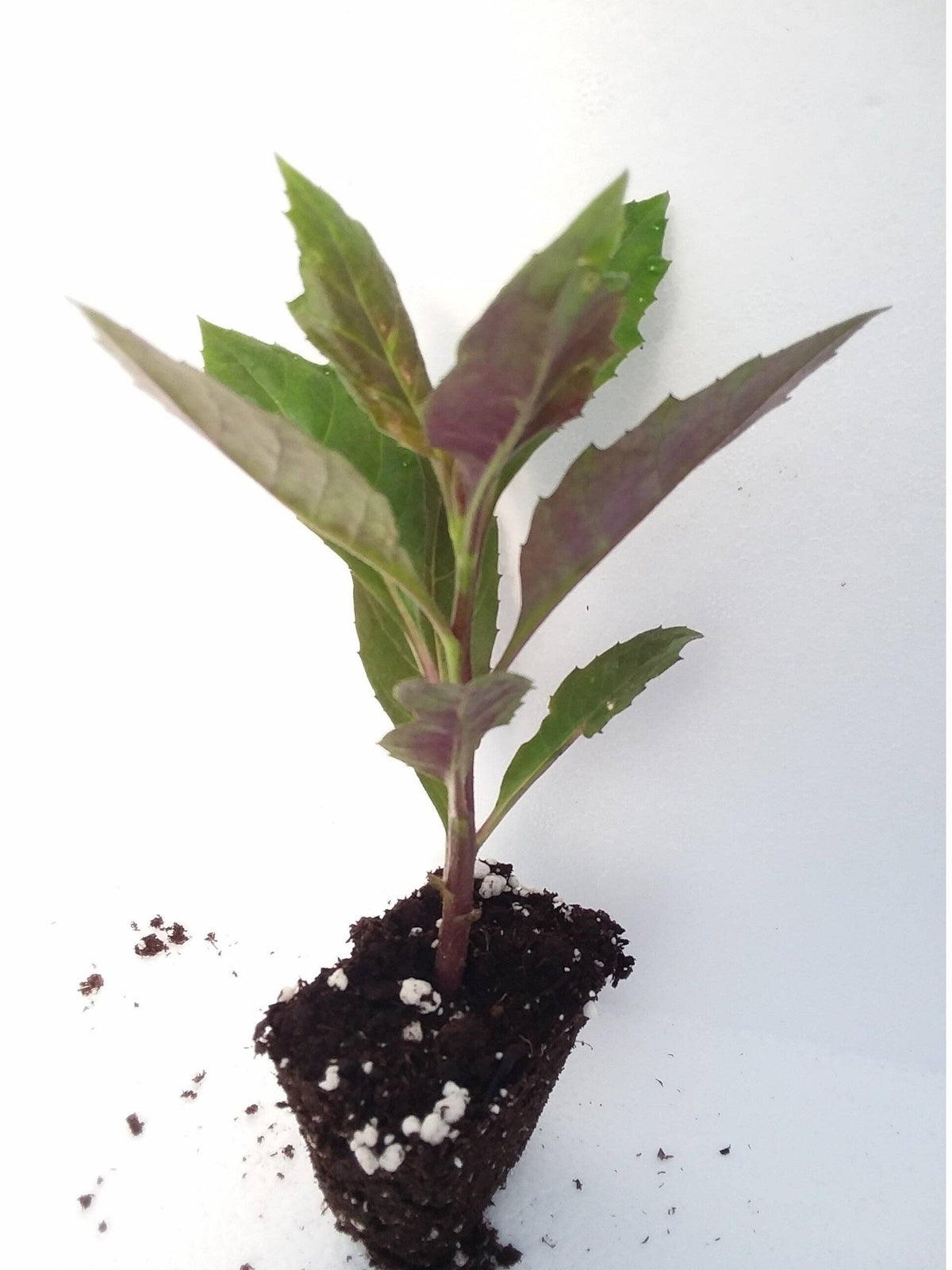
Okinawan Spinach starter plant Gynura bicolor. 24-36". Zones 9-11.
💜🌿 Okinawan Spinach – Gynura bicolor Overview
Okinawan Spinach (Gynura bicolor) is a beautiful tropical leafy vegetable that's just as attractive in an ornamental planter as it is in an edible garden. Its leaves are deep green on top with striking purple undersides, creating a gorgeous two-toned effect. Traditionally grown as a vegetable in parts of East and Southeast Asia, it has a mild, distinctive flavor and can be harvested repeatedly throughout the warm growing season.
✨ Appearance
- Elongated green leaves with lightly toothed edges
- Striking purple to burgundy leaf undersides
- Purple coloration may also appear along the stems
- Upright to spreading growth habit
- Develops into a lush, bushy plant with regular harvesting
- May produce small orange-yellow flower heads as it matures
- Grown for both its edible foliage and ornamental appearance
☀️ Light
- Prefers bright light to partial sun
- Outdoors, morning sun with some protection from intense afternoon heat works beautifully
- Can tolerate more direct sun when properly acclimated and adequately watered
- Indoors, provide a very bright window or strong grow light
- Good lighting helps maintain compact growth and rich purple coloration
- Too little light can cause stretched, weaker growth
💧 Water
- Prefers relatively consistent moisture
- Water when the top 1 inch of soil begins to dry
- Water thoroughly and allow excess moisture to drain
- Avoid allowing the plant to remain completely dry for extended periods
- Container-grown plants may require frequent watering during hot summer weather
⚠️ Watering Warning
Okinawan Spinach appreciates consistent moisture, but moist doesn't mean soggy. Don't water on a strict schedule—check the soil first. Water when the surface begins to dry and allow excess moisture to drain freely. Severe drying can cause wilting and tougher foliage, while constantly saturated soil can lead to root problems.
🌡️ Temperature & Humidity
- Loves warm, tropical conditions
- Ideal temperature: approximately 65–90°F
- Handles summer heat well with adequate moisture
- Appreciates moderate humidity
- Sensitive to frost and prolonged cold
- Bring container plants indoors before cold fall temperatures arrive
- Appreciates good airflow
🌱 Soil
-
Prefers rich, fertile, well-draining soil
- Quality potting soil or coco coir
- Compost or other organic matter
- Perlite or pumice for drainage and aeration
- Soil should retain some moisture without becoming waterlogged
- Containers should always provide good drainage
🌿 Growth & Care
- Fast-growing under warm, bright conditions
- Regular harvesting encourages branching and tender new growth
- Pinch growing tips to create a fuller, bushier plant
- Easily propagated from stem cuttings
- Fertilize lightly during active growth to support continued leaf production
- Flower buds can be removed if you'd rather encourage foliage growth
- Can be grown outdoors during warm weather and overwintered indoors in colder climates
- Harvest young leaves and tender shoots as needed
🐾 Pet Safety
- Reliable pet-specific safety information for Gynura bicolor is limited
- A plant being edible for humans does not automatically establish safety for cats or dogs
- It's safest to prevent pets from consuming significant amounts
💜 Why Plant Lovers Love It
- Beautiful green-and-purple foliage
- Edible and ornamental
- Fast-growing and easy to harvest
- Easy to propagate from cuttings
- Responds beautifully to regular pruning
- Perfect for edible landscapes and patio containers
- An excellent choice for people who want their vegetable garden to look like part of their plant collection
- Because apparently spinach decided it deserved purple leaves and a tropical makeover. 😂💜🌿
Plant Nerd Note: Gynura bicolor belongs to the Asteraceae family, making it a relative of plants such as sunflowers and lettuce rather than true spinach. “Okinawan Spinach” is a common name based on its use as a leafy vegetable—it is not botanically related to traditional spinach (Spinacia oleracea).
Culinary Use Note: The young leaves and tender shoots of Gynura bicolor are traditionally eaten cooked and are also used fresh in some preparations. Flavor and texture can become stronger as foliage matures. As with any edible plant being sold for consumption, customers should positively identify the plant and wash harvested foliage thoroughly before use.
Share