Gingers greenhouse
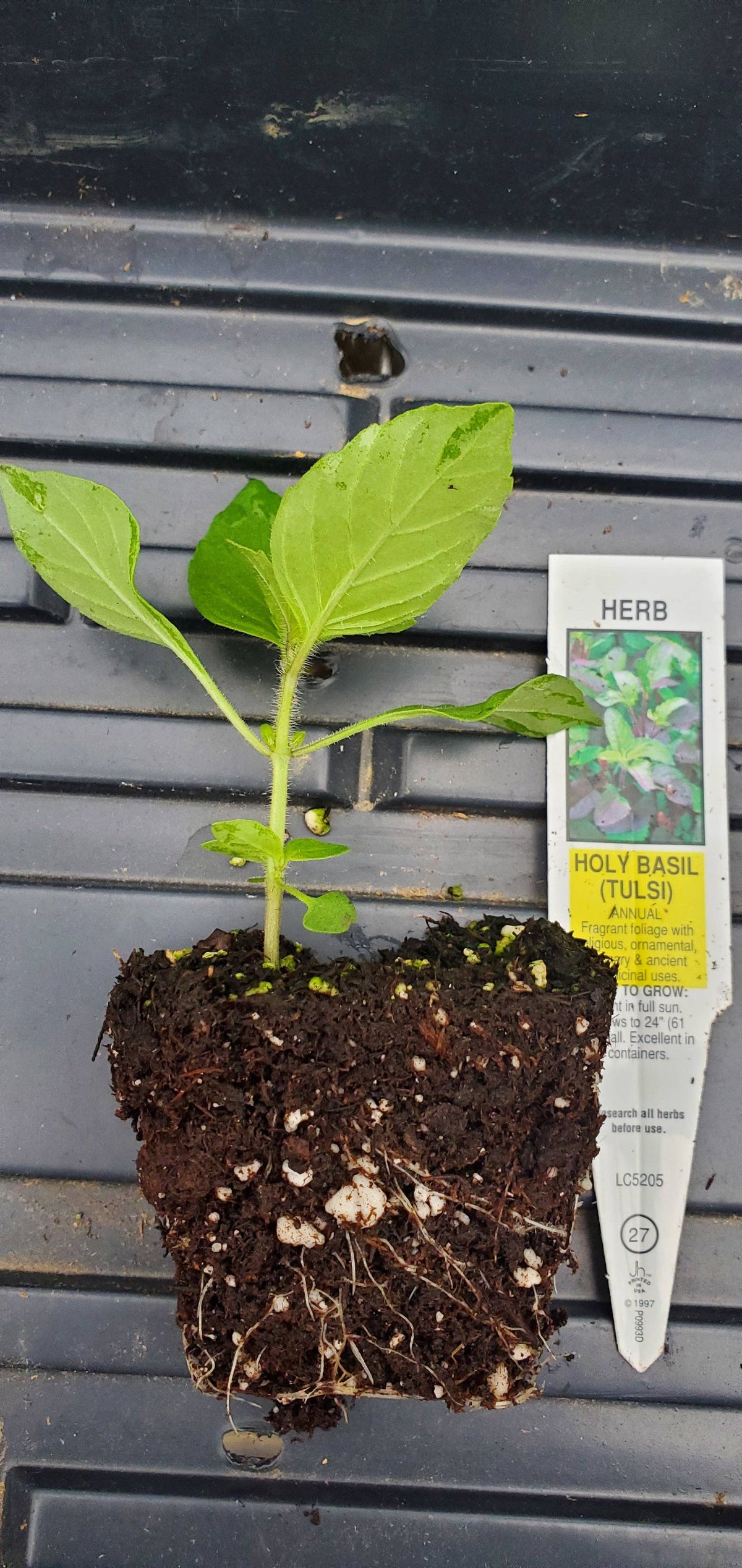
Holy Basil Tulsi
Holy Basil Tulsi
Couldn't load pickup availability
🌿✨ Holy Basil – Tulsi Overview
Holy Basil, commonly known as Tulsi, is an aromatic member of the basil family traditionally grown throughout South Asia and treasured for its fragrant foliage, culinary uses, and cultural significance. Unlike common sweet basil, Tulsi has a distinctive spicy, clove-like aroma and flavor. It makes a beautiful, useful addition to an herb collection and can be grown indoors in a sunny location or outdoors during warm weather.
✨ Appearance
- Soft green, aromatic foliage
- Leaves may have slightly toothed edges and a lightly textured surface
- Upright, branching growth habit
- Produces delicate flower spikes as it matures
- Flowers are attractive to bees and other pollinators when grown outdoors
- Regular pinching encourages a fuller, bushier plant
- Appearance can vary depending on the particular type of Tulsi
☀️ Light
- Loves bright light
- Indoors, provide your brightest sunny window or a strong grow light
- Several hours of direct sunlight are beneficial
- Outdoors, performs well in full sun to partial sun
- Plants grown in insufficient light may become thin and leggy
- Gradually acclimate indoor-grown plants before placing them in strong outdoor sunlight
💧 Water
- Water when the top 1 inch of soil begins to dry
- Water thoroughly and allow excess moisture to drain
- Prefers relatively consistent moisture during active growth
- Established plants can tolerate brief periods of dryness
- Container-grown plants may require more frequent watering during hot weather
⚠️ Watering Warning
Tulsi appreciates regular moisture, but don't keep the roots constantly soggy. Don't water on a strict schedule—check the soil first. Water when the upper layer begins to dry, and always allow excess water to drain. Prolonged saturated soil can cause yellowing and root problems, while severe drought can cause wilting and leaf drop.
🌡️ Temperature & Humidity
- Loves warm temperatures
- Ideal temperature: approximately 65–90°F
- Comfortable in average household humidity
- Appreciates good airflow
- Sensitive to cold temperatures
- Not frost tolerant
- Bring container plants indoors before cold fall temperatures arrive
🌱 Soil
-
Prefers fertile, well-draining soil
- Quality indoor potting soil or coco coir
- Perlite or pumice for drainage
- Compost or other organic matter can be incorporated when grown outdoors
- Avoid heavy soil that remains waterlogged
- Always use a container with good drainage
🌿 Growth & Care
- Fast-growing under warm, bright conditions
- Pinch growing tips regularly to encourage branching and a fuller plant
- Harvesting leaves also encourages fresh growth
- Flower spikes can be removed to encourage continued leaf production
- Alternatively, allow some flowers to mature if you'd like to collect seeds
- Fertilize lightly during active growth
- Can be propagated from seeds or stem cuttings
- Often grown as an annual outdoors in colder climates but can be maintained indoors with sufficient warmth and light
🐾 Pet Safety
- Because concentrated plant compounds and essential oils can affect pets differently than humans, it's best to prevent cats and dogs from consuming significant amounts of Tulsi
- Never give concentrated Tulsi extracts or essential oils to pets unless specifically directed by a veterinarian
💚 Why Plant Lovers Love It
- Wonderfully fragrant foliage
- Can be harvested as a fresh herb
- Fast-growing and easy to prune
- Attractive to pollinators when flowering outdoors
- Easy to grow from seed or cuttings
- Has centuries of cultural and traditional significance
- A beautiful plant that can be appreciated for much more than its appearance 🌿✨
Plant Nerd Note: “Tulsi” or “Holy Basil” can refer to several cultivated forms within the basil group. Ocimum tenuiflorum (also known by the synonym Ocimum sanctum) is the species most strongly associated with traditional Tulsi. Common types include Rama Tulsi, Krishna Tulsi, and Vana Tulsi, which can differ in foliage color, aroma, flavor, and growth habit. If your supplier identifies which type you're carrying, it's worth including that name on your listing.
Traditional Use Note: Tulsi has a long history of use in Ayurveda and is commonly prepared as an herbal tea or used as a culinary herb. Traditional uses shouldn't be treated as proven medical benefits, and customers who are pregnant, take medications, or have medical conditions should check with a qualified healthcare professional before using concentrated Tulsi products or supplements.
Share