The Happy Monstera Plant Co
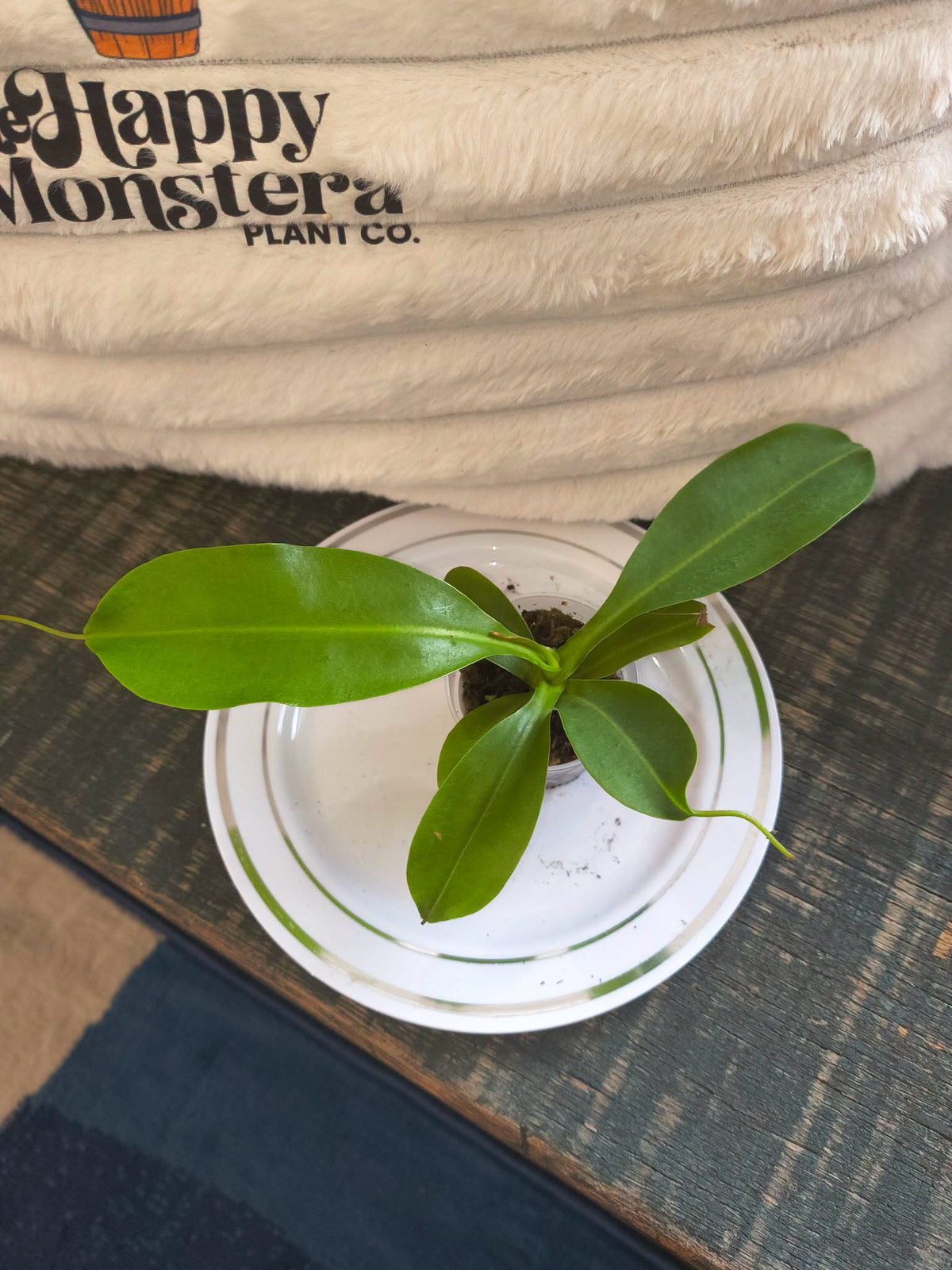
Nepenthes 'Miranda' pitcher plant
Nepenthes 'Miranda' pitcher plant
Couldn't load pickup availability
🪴 Nepenthes 'Miranda' Overview
Nepenthes 'Miranda' is a spectacular tropical pitcher plant known for producing large, dramatic pitchers covered in beautiful red and burgundy speckling. One of the more recognizable Nepenthes hybrids in cultivation, 'Miranda' combines an exotic carnivorous appearance with relatively adaptable care, making it a great introduction to tropical pitcher plants as well as an impressive addition to an established carnivorous plant collection.
✨ Appearance
- Long, leathery green leaves with tendrils extending from their tips
- Tendrils develop into large hanging pitchers
- Pitchers typically feature green to yellow-green backgrounds heavily patterned with red or burgundy spotting
- Large, colorful pitcher rims (peristomes) add even more contrast
- Pitchers can become impressively large under ideal conditions
- Develops a climbing or vining growth habit as it matures
- Individual pitchers naturally vary in coloration and pattern
☀️ Light
- Prefers very bright, indirect light
- Gentle morning sun can encourage stronger pitcher coloration
- Insufficient light may result in fewer pitchers or a plant that stops producing them altogether
- Avoid suddenly exposing the plant to intense afternoon sun, which can scorch the foliage
- Gradually acclimate the plant when increasing its light exposure
💧 Water
- Keep the growing medium consistently moist but not waterlogged
- Use distilled water, rainwater, or reverse-osmosis (RO) water
- Avoid softened water and mineral-heavy tap water
- Never allow the growing medium to completely dry out
- Water thoroughly while allowing excess water to drain freely
⚠️ Watering Warning
Nepenthes are sensitive to minerals and salts, so water quality matters! Distilled, rain, or RO water is the safest choice. Keep the growing medium consistently damp, but don't leave the pot permanently sitting in deep water. Unlike bog-growing carnivorous plants, Nepenthes roots appreciate plenty of moisture and plenty of oxygen.
🌡️ Temperature & Humidity
- Generally grows well in warm household conditions
- Ideal daytime temperatures are roughly 70–85°F
- Prefers moderate to high humidity
- Around 50–70% humidity or higher can encourage healthy pitcher development
- Protect from cold drafts and prolonged chilly conditions
- Good airflow is important, especially when humidity is high
🌱 Soil
-
Requires an airy, nutrient-poor carnivorous plant mix
- Long-fiber sphagnum moss
- Perlite
- Orchid bark may be added for additional airflow
- Never use ordinary potting soil
- Avoid mixes containing added fertilizer
- The growing medium should retain moisture while allowing plenty of air around the roots
🌿 Growth & Care
- Moderate to fast grower under favorable conditions
- Can eventually develop long climbing vines
- Basal shoots may appear around the base of established plants
- Older pitchers naturally brown and die and can be trimmed once completely spent
- Don't remove a healthy leaf simply because its pitcher has died
- Avoid unnecessary root disturbance when repotting
- A hanging basket can beautifully showcase its increasingly large pitchers
🪰 Feeding
- Pitchers naturally attract and digest insects
- Plants grown indoors can occasionally be given a small insect if they aren't catching their own
- Avoid feeding meat, human food, or oversized insects
- Don't stuff pitchers with bugs—occasional feeding is plenty
- Light remains the plant's primary energy source; insects provide supplemental nutrients
🐾 Pet Safety
- Nepenthes are generally considered low-risk around cats and dogs
- They are not known for the calcium oxalate toxicity associated with many common aroids
- It's still best to discourage pets from chewing the foliage or drinking liquid from the pitchers
❤️ Why Collectors Love It
- Huge, dramatic carnivorous pitchers
- Gorgeous red and burgundy speckling
- Fascinating pitcher development
- Can become an incredible hanging statement plant
- Relatively adaptable compared with many more demanding Nepenthes
- Naturally catches insects
- Looks like something that wandered out of a prehistoric jungle and decided to eat the fungus gnats 🪰🌿
Plant Nerd Note: Nepenthes 'Miranda' is a horticultural hybrid rather than a naturally occurring species. Its exact published parentage is sometimes presented differently within the plant trade, so it's safest to sell it simply as Nepenthes 'Miranda' rather than attaching uncertain parentage to the name.
Share