Gingers greenhouse
Parsley curled
Parsley curled
Couldn't load pickup availability
🌿 Curled Parsley – Petroselinum crispum Overview
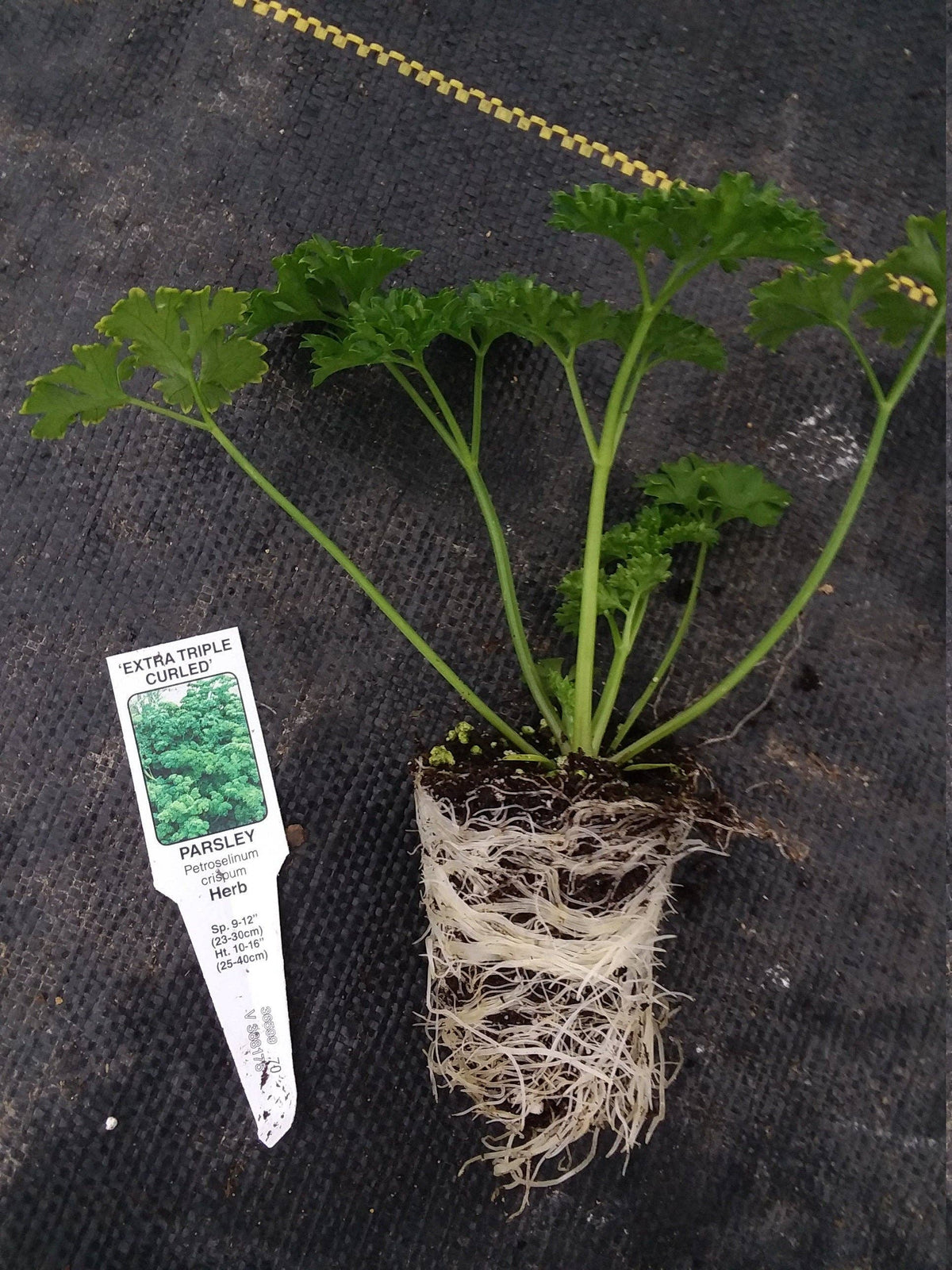
Curled Parsley (Petroselinum crispum) is a classic culinary herb loved for its tightly curled, bright green foliage and fresh, clean flavor. Its dense, ruffled leaves make it attractive enough for ornamental containers while also providing a continuous supply of fresh parsley for the kitchen. It's naturally a biennial, typically producing abundant leafy growth its first season before flowering and setting seed as it matures.
✨ Appearance
- Bright to deep green foliage
- Distinctive tightly curled and ruffled leaves
- Forms a dense, leafy mound
- Attractive enough for herb gardens, mixed containers, and edible landscaping
- Mature plants may eventually send up tall flower stalks
- Produces small yellow-green flowers when allowed to bloom
☀️ Light
- Prefers full sun to partial sun
- Approximately 4–6+ hours of good light encourages dense growth
- In very hot weather, some afternoon shade can help protect the foliage
- Indoors, place near a bright sunny window or under a grow light
- Too little light can produce thin, stretched growth
💧 Water
- Prefers relatively consistent moisture
- Water when the top 1 inch of soil begins to dry
- Water thoroughly and allow excess moisture to drain
- Avoid allowing the plant to repeatedly wilt completely
- Container-grown parsley may need more frequent watering during warm weather
⚠️ Watering Warning
Curled Parsley grows best with even moisture but not soggy soil. Don't water on a strict schedule—check the soil first. Water when the upper layer begins to dry. Repeated severe drying can stress the plant and reduce tender new growth, while constantly saturated soil can cause root problems.
🌡️ Temperature & Humidity
- Prefers mild to moderately warm conditions
- Often grows especially well during spring and fall
- Can tolerate cooler temperatures better than many tropical herbs
- May struggle or bolt more quickly during prolonged extreme heat
- Comfortable in average humidity
- Appreciates good airflow
🌱 Soil
-
Prefers fertile, well-draining soil
- Quality potting or garden soil
- Compost or organic matter
- Perlite or similar material for additional drainage
- Soil should retain some moisture without remaining waterlogged
- Containers should have good drainage
🌿 Growth & Care
- Harvest the outer stems near the base first, allowing the center to continue producing new growth
- Regular harvesting encourages continued leaf production
- Avoid removing more than about one-third of the plant at one time
- Feed lightly during active growth, particularly when grown in containers
- Parsley develops a substantial taproot, so it appreciates a reasonably deep container
- It is a biennial rather than a true annual
- During its second growing cycle, mature plants may produce a flower stalk and eventually set seed
- Once flowering begins, foliage production and quality typically decline
🐾 Pet Safety
- Parsley contains naturally occurring compounds that can cause problems when consumed in sufficiently large quantities
- Small incidental exposure is different from a pet consuming large amounts of the plant
- It's best to discourage cats and dogs from repeatedly eating it
- Concentrated parsley oils or extracts should not be treated the same as normal culinary use of fresh leaves
🍽️ Why Plant Lovers Love It
- Classic edible kitchen herb
- Beautiful tightly curled foliage
- Easy to harvest as needed
- Works wonderfully in containers
- Attractive enough for ornamental herb gardens
- Fresh leaves can be harvested repeatedly
- Handles cooler weather better than many warm-season herbs
- And unlike half the herbs in the garden, you already know exactly what you're going to do with it when it needs a haircut. 😂🌿✂️
Plant Nerd Note: Curled Parsley is Petroselinum crispum, a member of the carrot family (Apiaceae). It's closely related to carrots, celery, dill, and cilantro. Curled parsley and Italian flat-leaf parsley belong to the same species but are different cultivated forms selected for their foliage characteristics.
Culinary Use Note: Curled Parsley is widely grown as an edible culinary herb. Harvest clean, healthy foliage and wash it thoroughly before use. Its fresh leaves are commonly used in sauces, salads, soups, herb blends, and garnishes, and regular harvesting helps keep the plant producing fresh growth.
Share