The Happy Monstera Plant Co
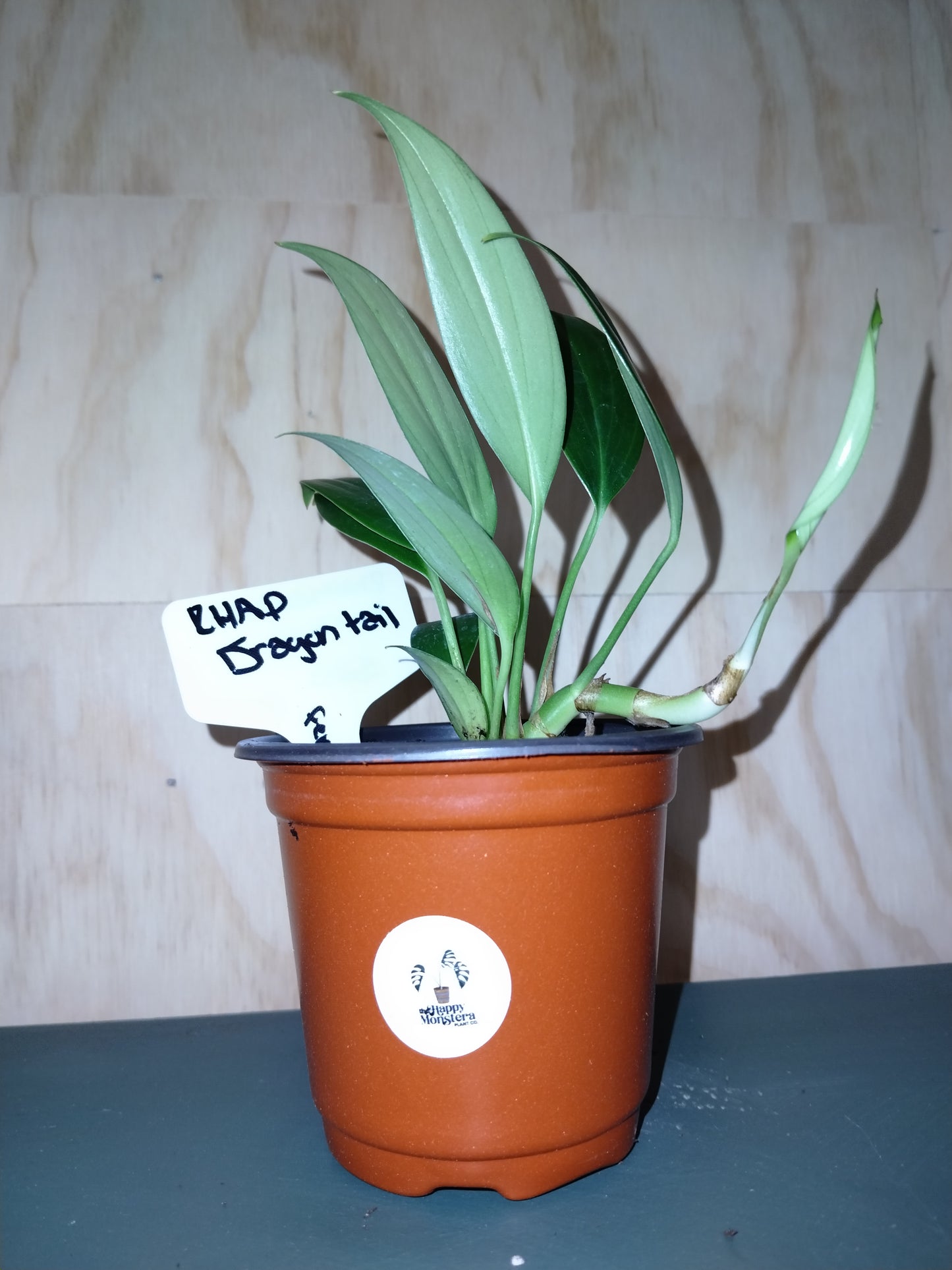
Rhap Dragon tail
Rhap Dragon tail
Couldn't load pickup availability
🌿 Basic Overview
"Rhap dragon" refers to Rhaphidophora decursiva, also known as the "Dragon Tail" plant, a climbing aroid with striking, deeply lobed leaves that resemble a dragon's tail as the plant matures
-
Scientific name: Rhaphidophora decursiva
-
Common names: Creeping Philodendron, Shingle Plant (though not a true philodendron)
-
Family: Araceae
-
Origin: Native to tropical regions of China, India, and Southeast Asia
-
Type: Tropical evergreen climber
🌱 Appearance
-
Juvenile plants start with small, oval leaves, which later mature into large, deeply split pinnate leaves that can reach up to 3 feet long in ideal conditions.
-
The mature foliage resembles a split-leaf monstera or palm frond, creating a lush tropical aesthetic.
-
Grows as an epiphyte or terrestrial vine, using aerial roots to climb.
☀️ Light
-
Thrives in bright, indirect light.
-
Can tolerate medium light but will grow slower and produce smaller leaves.
-
Avoid direct sun, which can burn the foliage.
💧 Water
-
Water when the top 2 inches of soil feel dry.
-
Keep soil lightly moist but not soggy — overwatering can cause root rot.
-
Prefers well-draining soil rich in organic matter.
🌡️ Temperature & Humidity
-
Ideal temperature range: 65–85°F (18–29°C).
-
Prefers moderate to high humidity (60%+).
-
Avoid cold drafts or temperatures below 55°F (13°C).
🌸 Growth & Care
-
Fast-growing climber that benefits from a moss pole or trellis for vertical support.
-
Easy to propagate via stem cuttings with aerial roots.
-
Feed monthly during the growing season (spring–summer) with a balanced, diluted fertilizer.
⚠️ Toxicity
-
Like many Araceae species, it’s toxic to pets and humans if ingested due to calcium oxalate crystals.
🌴 Notable Features
-
Excellent statement plant for indoor spaces or tropical landscapes.
-
Juvenile and mature leaves look dramatically different, making it fun to watch as it grows.
-
Often mistaken for a Monstera or Philodendron, but it belongs to its own genus (Rhaphidophora).
Share