Gingers greenhouse
Tricolor Sage
Tricolor Sage
Couldn't load pickup availability
🌿🩷 Tricolor Sage – Salvia officinalis 'Tricolor' Overview
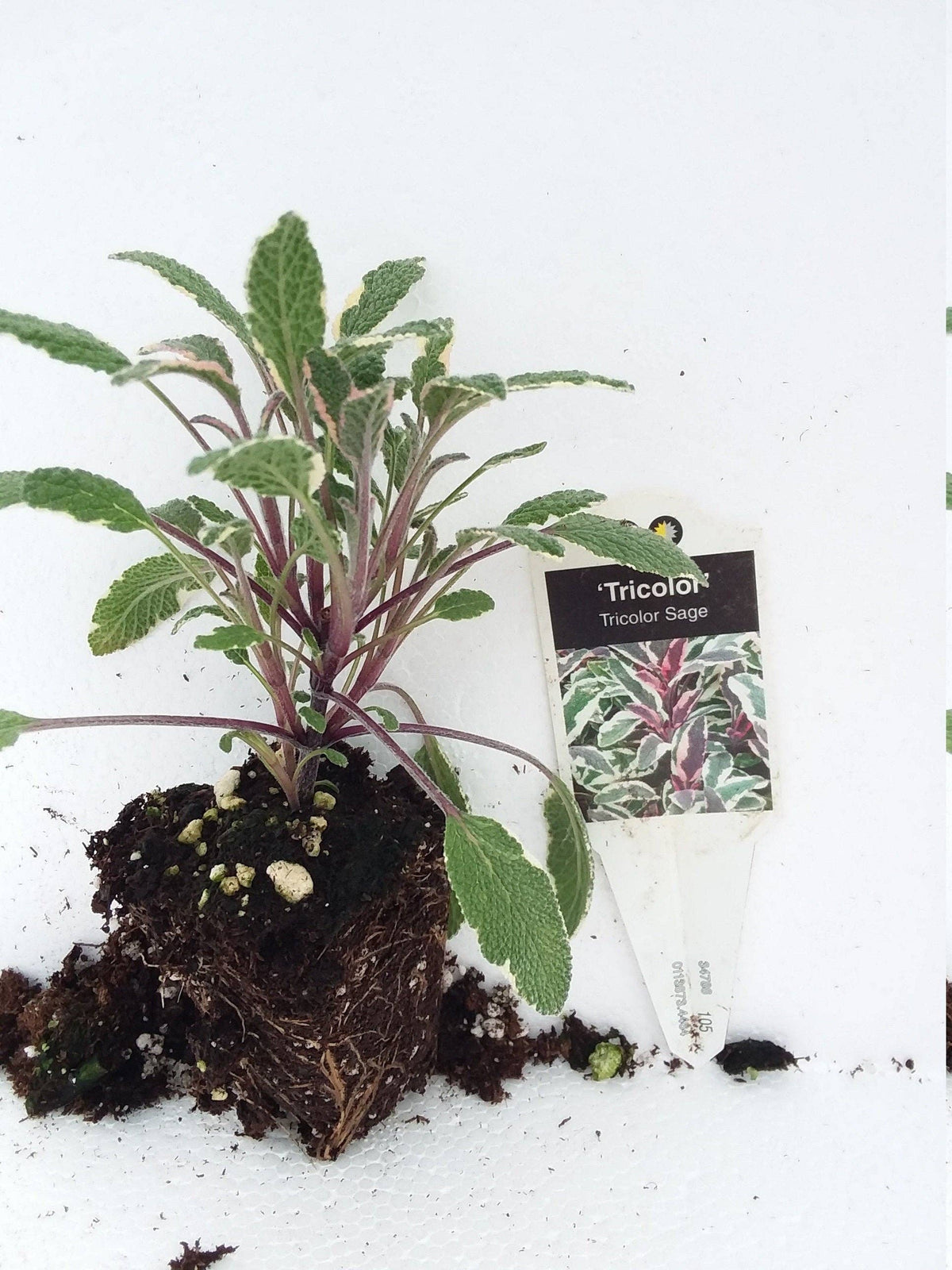
Tricolor Sage (Salvia officinalis 'Tricolor') is a beautiful variegated form of traditional culinary sage, grown for both its aromatic leaves and colorful ornamental foliage. Its soft gray-green leaves are irregularly edged and splashed with creamy white, while new growth often develops gorgeous pink to rosy-purple tones. It's an edible herb that looks every bit as good in a decorative planter as it does in an herb garden.
✨ Appearance
- Soft, slightly fuzzy and highly aromatic foliage
- Gray-green leaves variegated with creamy white
- New growth frequently develops pink, rosy, or purplish tones
- Variegation varies naturally from leaf to leaf
- Compact, bushy growth habit
- Stems can become woody as the plant matures
- May produce spikes of lavender-blue to purple flowers
- Flowers are attractive to bees and other pollinators outdoors
☀️ Light
- Prefers very bright light to full sun
- Outdoors, approximately 6 or more hours of sunlight is ideal
- Indoors, provide your brightest sunny window or a strong grow light
- Plenty of light helps maintain compact growth and beautiful variegation
- Strong light can encourage richer pink coloration in new growth
- Gradually acclimate indoor-grown plants before moving them into intense outdoor sun
💧 Water
- Allow the upper portion of the soil to dry between waterings
- Water thoroughly and allow excess moisture to drain
- Established sage is fairly drought-tolerant
- Newly planted or container-grown sage may require more frequent watering
- Reduce watering during cooler temperatures and slower growth
⚠️ Watering Warning
Tricolor Sage would rather be slightly too dry than constantly wet. Don't water on a strict schedule—check the soil first. Sage is particularly sensitive to heavy, soggy conditions, and prolonged moisture around the roots can cause yellowing, decline, and root rot. Excellent drainage is one of the most important parts of keeping this plant happy.
🌡️ Temperature & Humidity
- Handles warm conditions well
- Prefers average to relatively dry humidity
- Appreciates excellent airflow
- Established sage can tolerate cooler conditions better than tropical herbs
- Protect container-grown plants from severe winter conditions
- Avoid warm, extremely humid environments with poor airflow
🌱 Soil
-
Prefers loose, fast-draining soil
- Quality potting soil
- Perlite or pumice
- Coarse sand or fine bark may be added for additional drainage
- Does not require extremely rich soil
- Avoid dense, moisture-retentive mixes
- Containers should always have drainage holes
🌿 Growth & Care
- Compact, bushy growth habit
- Regular harvesting encourages fresh branching
- Light pruning helps maintain a dense, attractive shape
- Avoid severely cutting into old woody stems without active growth
- Fertilize lightly; excessive fertilizer can create soft growth and may reduce flavor intensity
- Can be propagated from stem cuttings
- Excellent for herb gardens, patio containers, and mixed edible plantings
- If a stem begins producing completely green leaves, prune that shoot to help preserve the variegated portions of the plant
🐾 Pet Safety
- Culinary sage is commonly used as an edible herb for people
- Small incidental exposure is generally considered lower-risk than many toxic ornamental plants
- Large amounts of sage or concentrated sage essential oils should not be given to pets without veterinary guidance
🩷 Why Plant Lovers Love It
- Gorgeous green, cream, and pink foliage
- Both ornamental and edible
- Classic savory sage fragrance
- Fairly drought-tolerant once established
- Beautiful in containers and herb gardens
- Flowers attract pollinators outdoors
- Each leaf develops its own variegated pattern
- It's basically regular sage dressed up for a fancy occasion. 😂🩷🌿
Plant Nerd Note: Tricolor Sage is a variegated cultivar of common culinary sage, Salvia officinalis. The pink coloration is usually most noticeable on newer growth, while older leaves often settle into shades of gray-green and creamy white. Because the variegation can occasionally revert, removing completely green shoots helps prevent the more vigorous green growth from overtaking the colorful portions of the plant.
Share